Brisbane takeaway
This article is written for Brisbane and South East Queensland conditions. If you want qualified help applying it at your property, the most relevant next step is garden maintenance.
Professional Horticulturalists
About the author
The Garden Barber Team shares practical Brisbane garden advice shaped by on-site horticultural work across lawns, hedges, irrigation and planting.
Meet The Garden Barber teamWhat is the right time to trim hedges in Brisbane?
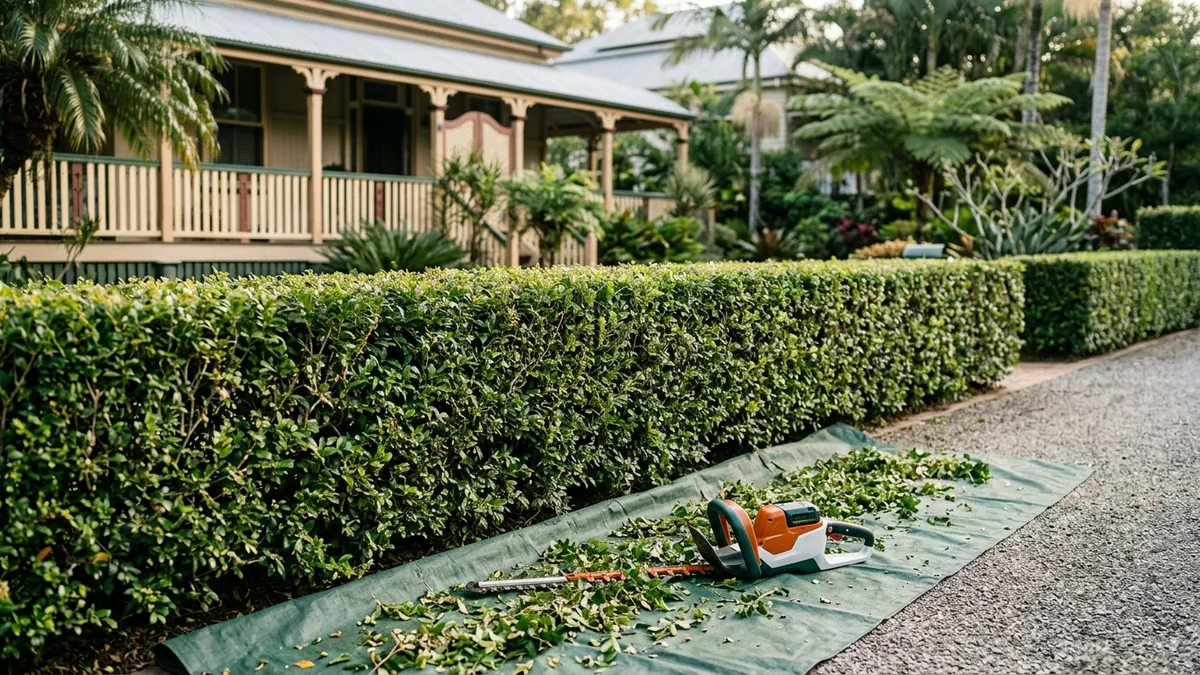
The right time depends on the species, the weather and how hard the hedge needs to be cut back. In Brisbane, we usually prefer measured trimming through active growth periods rather than severe cutting during heat stress.
For most homes, the goal is steady shape control and plant health, not waiting until the hedge is out of control and then attacking it.
Why do so many hedges end up thin at the bottom?
Usually because they are cut straight up and down or wider at the top than the base. That blocks light from reaching lower growth.
A slight taper keeps the hedge fuller from top to bottom and gives you a better long-term structure.
When should you call a professional for hedge work?
It is worth calling a professional when the hedge is tall, the access is awkward, the species needs a bit of judgement or the shape has drifted enough that a rough cut will make the problem worse.
That is especially true for statement hedges, premium street-front presentation and homes where one bad cut is very visible.
Brisbane action checklist
How should you apply this advice at a Brisbane property?
Start by matching the advice to the actual site condition, not the calendar alone. Check the lawn, hedges, garden beds, soil moisture, irrigation coverage, weeds, access and green waste volume before deciding whether the property needs a quick maintenance visit, a seasonal reset or a broader horticultural plan.
Check the pressure points
Look for the visible problems first: overgrown edges, hedge pressure, dry patches, tired mulch, weeds, poor drainage or plants that are not recovering.
Prioritise the visible lift
For most Brisbane homes, mowing, edging, selective pruning, bed tidy-up, mulch and irrigation checks usually change the property fastest.
Plan the maintenance rhythm
If the same issues keep returning, move from ad hoc tidy-ups to a regular schedule that suits Brisbane growth, rainfall and heat.
If you request help from The Garden Barber, include photos, the suburb, access notes, timing and the main outcome you want. That gives the team enough context to recommend the right mix of lawn mowing, pruning, hedging, irrigation, weed control, soft landscaping or ongoing garden maintenance.
The best first move is usually diagnostic: decide whether the garden is behind because of growth pressure, poor timing, water stress, compacted soil, plant choice, access limits or an irregular maintenance rhythm. Once that cause is clear, the work can stay focused instead of turning into a broad tidy-up that looks good for a week and then slips back.
For higher-presentation homes, pre-sale gardens and commercial frontages, the order of work matters. Edges, entries, hedges, paths and visible garden beds normally carry the first impression, while soil, mulch, irrigation and pruning timing decide whether the improvement lasts through Brisbane's next growth or dry spell.
Use the article as a starting point, then adjust it to the site: sunny lawn areas, shaded side paths, compact courtyards, river suburb soils and larger western blocks do not respond the same way. A qualified visit should translate the general advice into the next two or three jobs that will make the biggest practical difference for presentation, plant health and easier ongoing maintenance.
Useful related pages
Need help applying this advice?
Keep lawns, hedges, beds, watering issues and established gardens under control with regular maintenance.