For Brisbane gardens
We wrote this for Brisbane and South East Queensland weather and soils. If you'd like a hand, see our lawn mowing and lawn care page.
Founder and lead horticulturalist
About the author
Stan O'Donnell is the founder and lead horticulturalist at The Garden Barber. He started the business in 2017 and has formal horticultural training.
Read Stan O'Donnell's backgroundWhat a South East Queensland summer does to lawns
Lawns in South East Queensland cop a tough mix in summer. Heat builds fast and the humidity stays high. A storm can dump a lot of rain in an hour, then a run of dry days stresses the grass all over again. That's why a Brisbane lawn can look fine one week and patchy, soft or burnt the next.
More mowing won't fix it, and neither will more fertiliser. Get the basics right first: mowing height and watering depth, then the soil and drainage. Get the timing right too. If those are off, the lawn keeps going backwards however hard you work at it.
Watering your lawn in summer
Water deeply and less often. Light daily watering keeps the roots near the surface. A good soak wets the root zone properly, so the grass sends its roots deeper to find moisture.
As a rough guide, most established lawns do well with one or two deep waterings a week. Adjust for rain, your soil and the type of grass. Sandy soil dries out faster, shady spots stay damp longer, and compacted patches can shed water until they're treated.
How to tell if you've watered deeply enough
Deep watering means enough water to soak past the surface and down to the roots. A green surface doesn't prove the soil below is wet, so check it.
Water, wait a little, then push a screwdriver, trowel or soil probe into the ground. If the top's wet and the soil underneath is still dry, the lawn hasn't had a proper drink.
The best time to water
Early morning, before the day heats up. The lawn has time to take the water in before it evaporates, and the grass dries off during the day, which cuts the risk of fungus.
Late afternoon is second best. Watering at night is the worst choice in a humid summer, because the lawn stays damp for hours.
How high to mow in summer
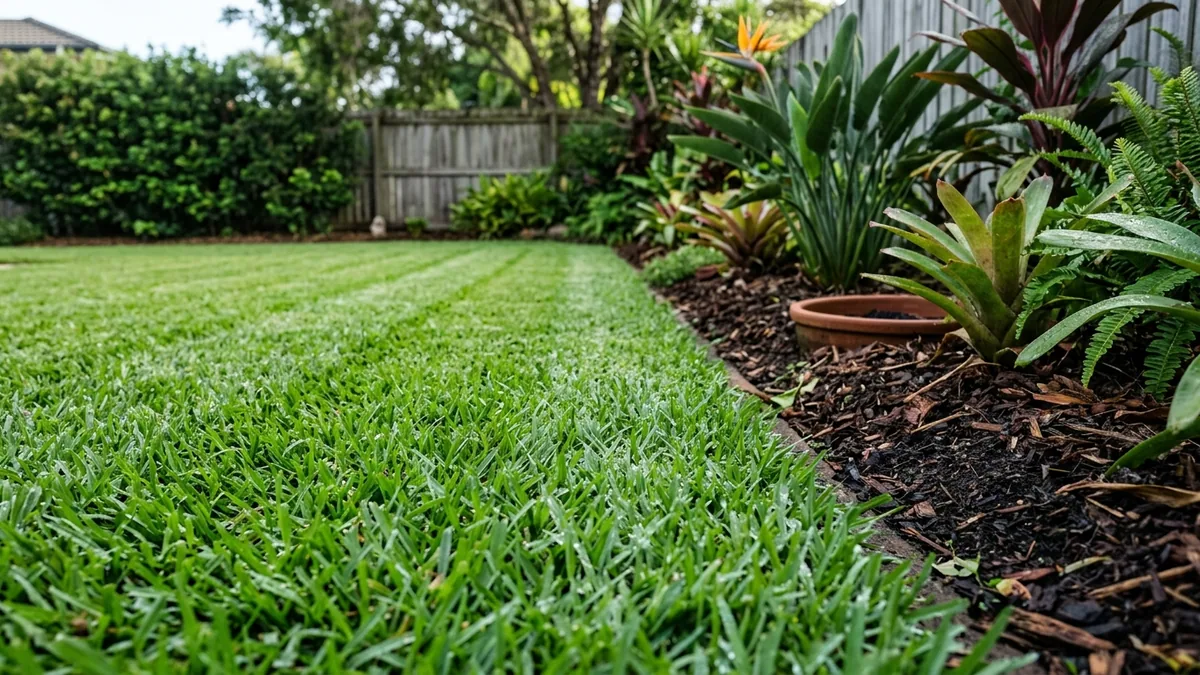
Keep the lawn a little longer through summer than you'd expect. Longer leaves shade the soil, slow evaporation and protect the crown of the grass from the heat.
Scalp it so it looks neat on day one and you can spend the next week or two dealing with the damage. The lawn loses its bounce, weeds move in, and bare or burnt patches turn up faster.
The most common mowing mistake
Taking too much off at once. If the lawn's grown long, don't try to knock it back in one cut.
Bring it down over a few mows. A good rule is to take off no more than about a third of the leaf each time. That keeps stress down and leaves enough leaf for the lawn to keep recovering.
Sharp blades matter
More than most people think. A sharp blade cuts cleanly. A blunt one tears the grass and leaves it pale, ragged and stressed.
If your lawn looks grey or furry the day after a mow, check the blade.
When summer rain comes and goes
Patchy rain is normal here. One week storms flatten the lawn, and the next it's hot, windy and dry.
So watch the lawn as well as the calendar. Look at its colour, how fast it springs back after people walk on it, and how damp the soil is under the surface. Notice how quickly it dries after rain, too. Those signs tell you more than the date does.
Signs of an overwatered lawn
An overwatered lawn feels soft and spongy and stays wet too long. You might see fungus or patchy thinning. In heavy soil, too much water also starves the roots of oxygen, which slows recovery and weakens the grass.
If some areas stay wet long after the rest has dried, the problem may be drainage or compaction and not the watering at all.
Fertiliser in a Brisbane summer
Summer isn't the time to hit a struggling lawn with a lot of fertiliser. If the heat has already stressed the grass, forcing soft new growth can make things worse.
Look after the roots and the soil first, and use gentle products that suit the season. Slow release feeding and soil improvement give steadier growth than a quick synthetic hit.
Feeding a stressed lawn
Go carefully. If heat, pests or poor drainage are stressing the lawn, sort that out first.
A lawn that can't use the nutrients just grows more leaf than its roots can support. You end up mowing more, and the lawn is no healthier for it.
Summer pests and disease
Through summer we watch for lawn grubs, caterpillars, fungus after humid spells, and patches dying back from compaction or poor drainage.
Birds pecking at the lawn can be a clue. So can sudden thinning, rings of discoloured grass, or one section that never recovers while the rest of the lawn does.
Patches that keep coming back
Don't guess and keep trying products. A patch that keeps coming back has a cause underneath.
It could be pests, soil that repels water or poor sprinkler coverage. Compaction, shade and drainage are other culprits. It could even be the mower, if that spot keeps getting scalped. The fix depends on what's causing it.
Organic lawn care
It can work well, as long as you know what's involved. We try organic methods first, wherever practical. Compost won't make every lawn problem disappear, and organic care still takes regular work.
It focuses on the soil, strong roots and careful feeding, with fewer chemicals. In Brisbane conditions that can work very well, especially when the lawn gets steady care and isn't treated as an emergency every few months.
Fixing a tired lawn without replacing it
First find out why it's tired. Plenty of tired lawns can be saved once you stop repeating whatever is stressing them.
Check the mowing height, sprinkler coverage, compaction and drainage. Then look at the soil, and look for any pests or disease. Once those are sorted, a lot of lawns bounce back better than their owners expect.
When to get help
It's worth calling someone when the lawn keeps going downhill despite your effort, when patches won't recover, or when there's an irrigation, drainage or pest problem you can't pin down.
A regular lawn mowing service helps too if you'd rather not spend your weekends mowing. That matters most where the lawn is a big part of how the house looks from the street.
What we suggest first
For most homes, we suggest settling the basics before you spend money on bigger fixes. Mow at a sensible height, water properly, check the soil and look for anything obvious that's stressing the lawn.
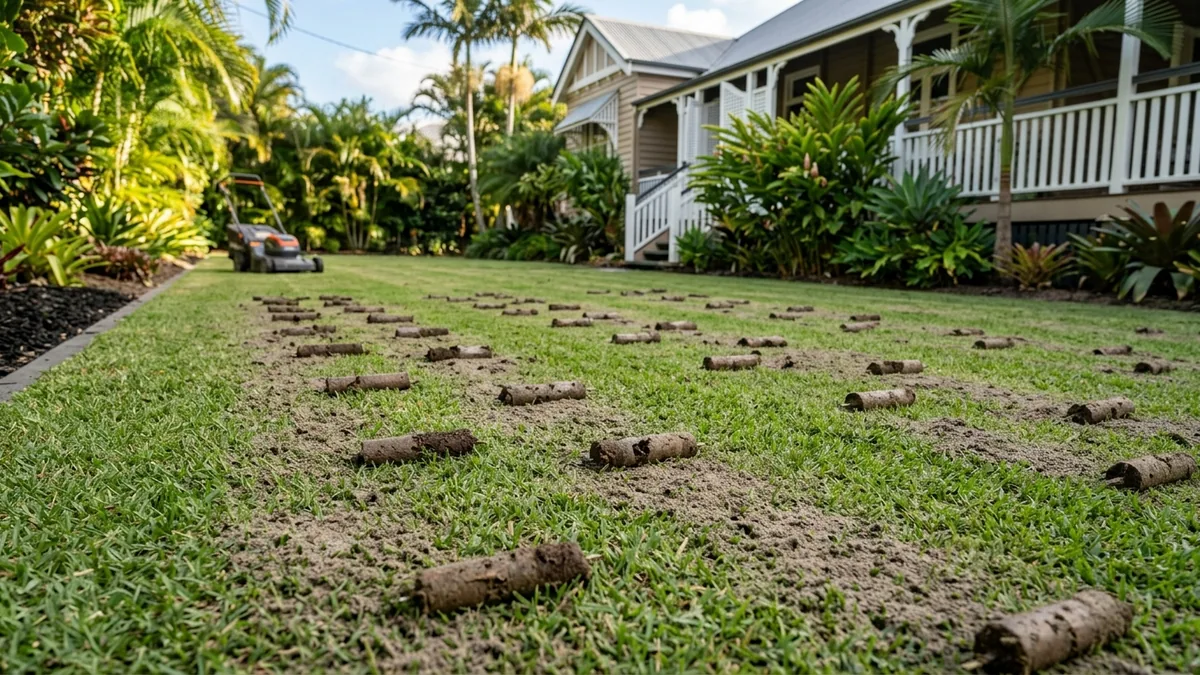
Once that's done, we can tell you whether the lawn needs regular mowing, some seasonal work or a wider look at the garden and irrigation. Our lawn care also covers seasonal lawn applications, lawn aeration, coring and seeding.
If the heat's been knocking your lawn around, call 1300 001 803 or send a few photos through the quote form. We'll look for the cause, as well as the patches you can see.
Sources used in this guide
Free quotes
Getting a quote
Quotes are free. Send your suburb and a few photos through the quote form.
Other pages that might help
Get us to do it
Regular mowing and edging, with the paths and driveway blown clean.