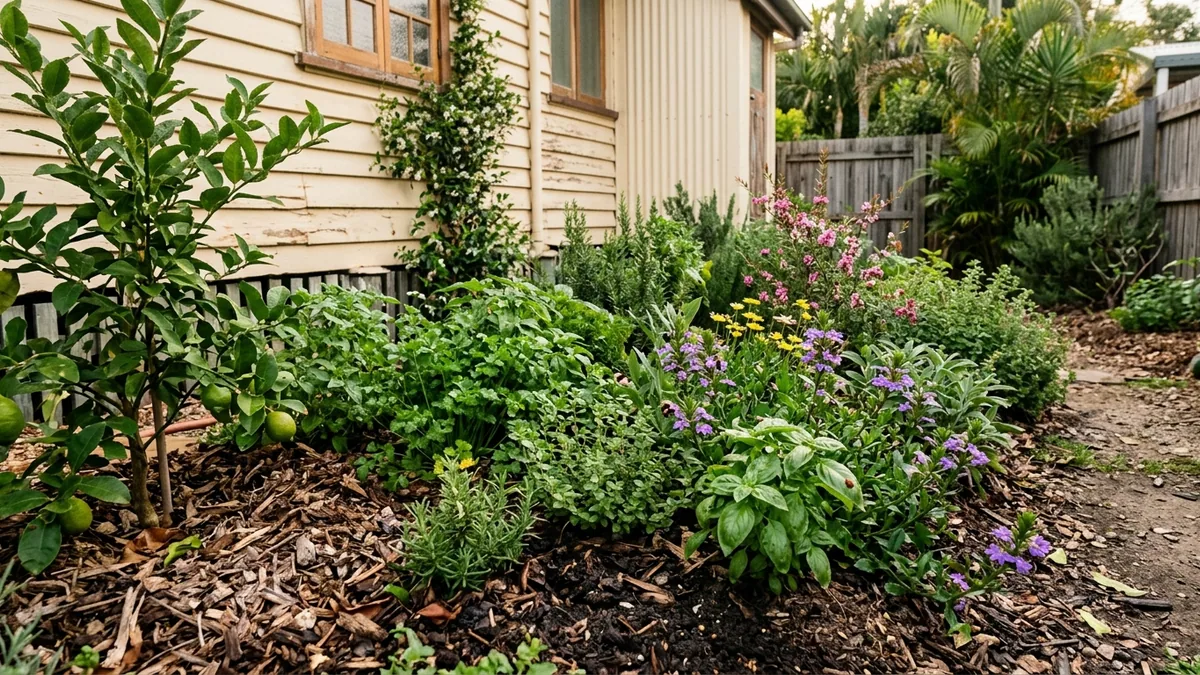
For Brisbane gardens
We wrote this for Brisbane and South East Queensland weather and soils. If you'd like a hand, see our organic horticulture page.
Founder and lead horticulturalist
About the author
Stan O'Donnell is the founder and lead horticulturalist at The Garden Barber. He started the business in 2017 and has formal horticultural training.
Read Stan O'Donnell's backgroundWhy go organic in a Brisbane garden
Organic gardening suits a lot of Brisbane homes because it goes after the cause of a problem. It doesn't force fast growth on top, and it doesn't reach for a stronger product every time something goes wrong. It builds up the soil and the plants over time, with fewer harsh chemicals in the garden.
That counts for a lot when kids and pets use the garden every day.
What organic care covers
Using fewer chemicals is part of it. The bigger part is how you look after the whole garden.
Organic horticulture covers organic fertilising, composting and soil improvement, natural pest control and support for beneficial insects. The aim is a garden that improves year after year, and that takes steady care.
Why soil health matters
Healthy soil holds water, grows good roots and helps plants cope with stress. Brisbane can throw heat, downpours and dry spells at a garden in the same season, so that matters here.
Plants in good soil aren't fighting from a weak start. They need fewer rescue treatments.
Families and pets
Organic care is a good fit for plenty of households. We try organic methods first, so there are fewer harsh synthetic products around the places kids and pets use most.
Some problems still need treating. We start with the gentlest option that will work.
What organic pest control looks like
First, work out exactly what the problem is. Then improve the plant's health, encourage beneficial insects and pick the gentlest treatment that still does the job.
That might mean pruning to let air through, changing how you water or feeding the life in the soil. It might mean a targeted organic product in place of a spray that hits everything.
Organic care for busy homeowners
It works well when the care is regular. Some people expect organic gardening to be fussy and hard to keep up. In practice, a well kept organic garden settles down over time, because it doesn't need constant fixing.
Build good soil and stay on top of the basics.
When we suggest going organic
We suggest it for households that want gentle care, healthy soil over the years and quiet work. Our equipment is electric, so there are no petrol fumes. It suits established homes where the lawn, hedges, plants and soil need looking after as one garden.
If you'd like us to use organic methods, say so when you call 1300 001 803 or ask for a free quote through the form.
Free quotes
Getting a quote
Quotes are free. Send your suburb and a few photos through the quote form.
Other pages that might help
Get us to do it
We use organic fertiliser, compost and natural pest control first, wherever it's practical.